
Jewish wedding photography is different from photographing any other wedding. The day has its own order, its own traditions, and a few moments that last only seconds. The glass breaks once. The bride walks around the groom seven times, and then it is done. Because of that, a photographer needs to know the ceremony as well as the rabbi does. In this post I want to walk through the moments I plan for, and how I make sure nothing gets missed.
Why Jewish wedding photography needs a plan
At most weddings, the big moments are spread across a long day. At a Jewish wedding they come in a burst. The bedeken, the chuppah, the ring, the glass and the dancing can all happen within ninety minutes. So I build a plan for every wedding, and I share it with the couple beforehand. First, I ask about the customs their families follow. Then I check the timeline with the venue. Finally, I decide where I will stand for each moment. For a good overview of the ceremony itself, Chabad has a clear guide to the Jewish wedding. Many of my couples read it before we meet.
Jewish wedding photography, moment by moment
Getting ready and the tisch
The day usually starts in two rooms. The bride is with her mother and friends, and the groom is at the tisch with the men, singing and signing the ketubah. Both are full of emotion. Therefore, I either photograph both myself, moving between them, or I bring a second photographer when the rooms are far apart. The ketubah signing is a detail I never skip, because that document hangs on the couple’s wall for life.
The bedeken
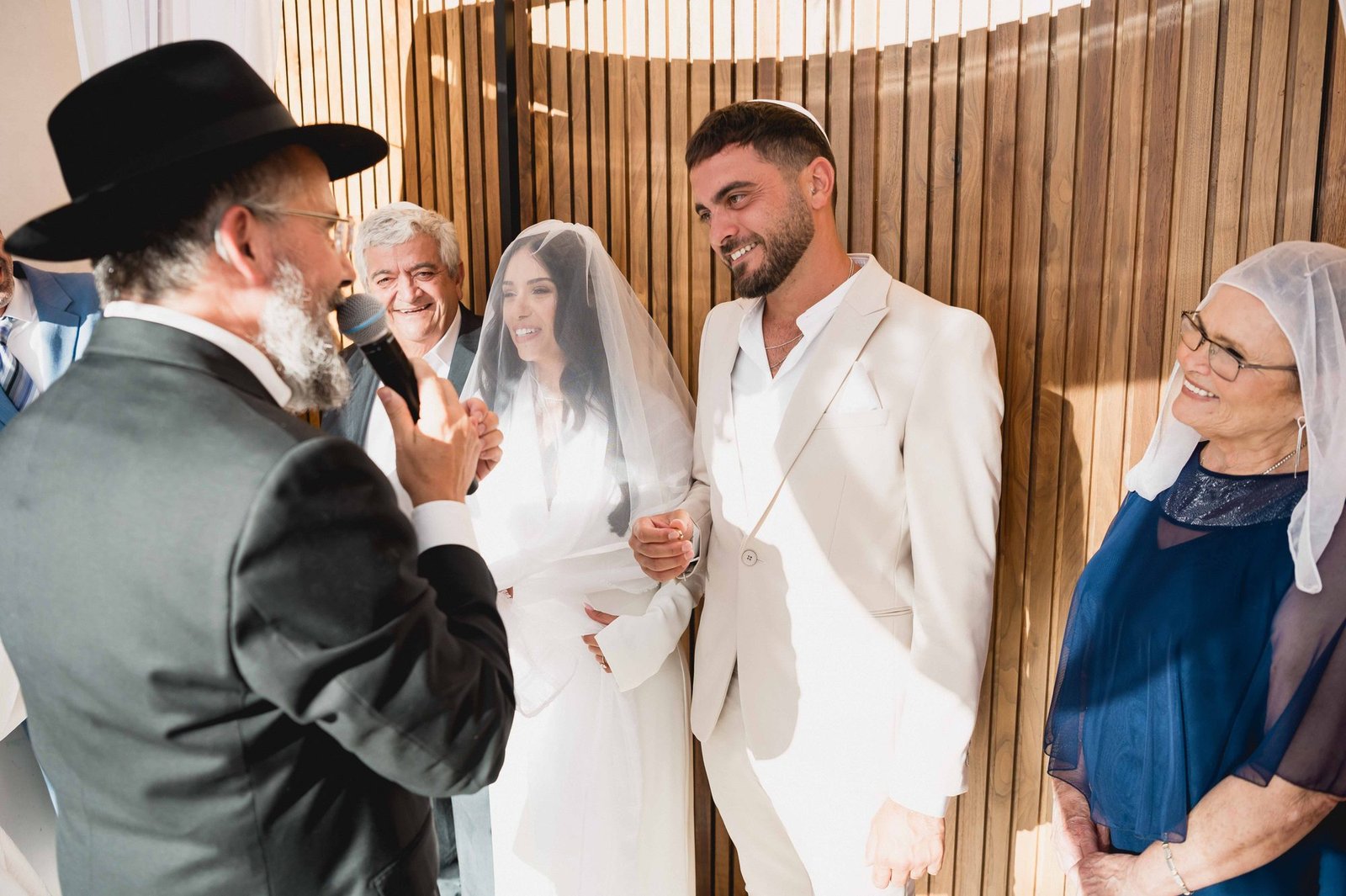
The groom is led, singing and dancing, to the bride. He sees her, sometimes for the first time in a week, and lowers the veil over her face. It takes less than a minute. Beforehand, I ask where the bride will sit and which side the groom will approach from. Then I stand where I can see both their faces. The mothers are usually right behind them, and their expressions are half the photo.
The chuppah
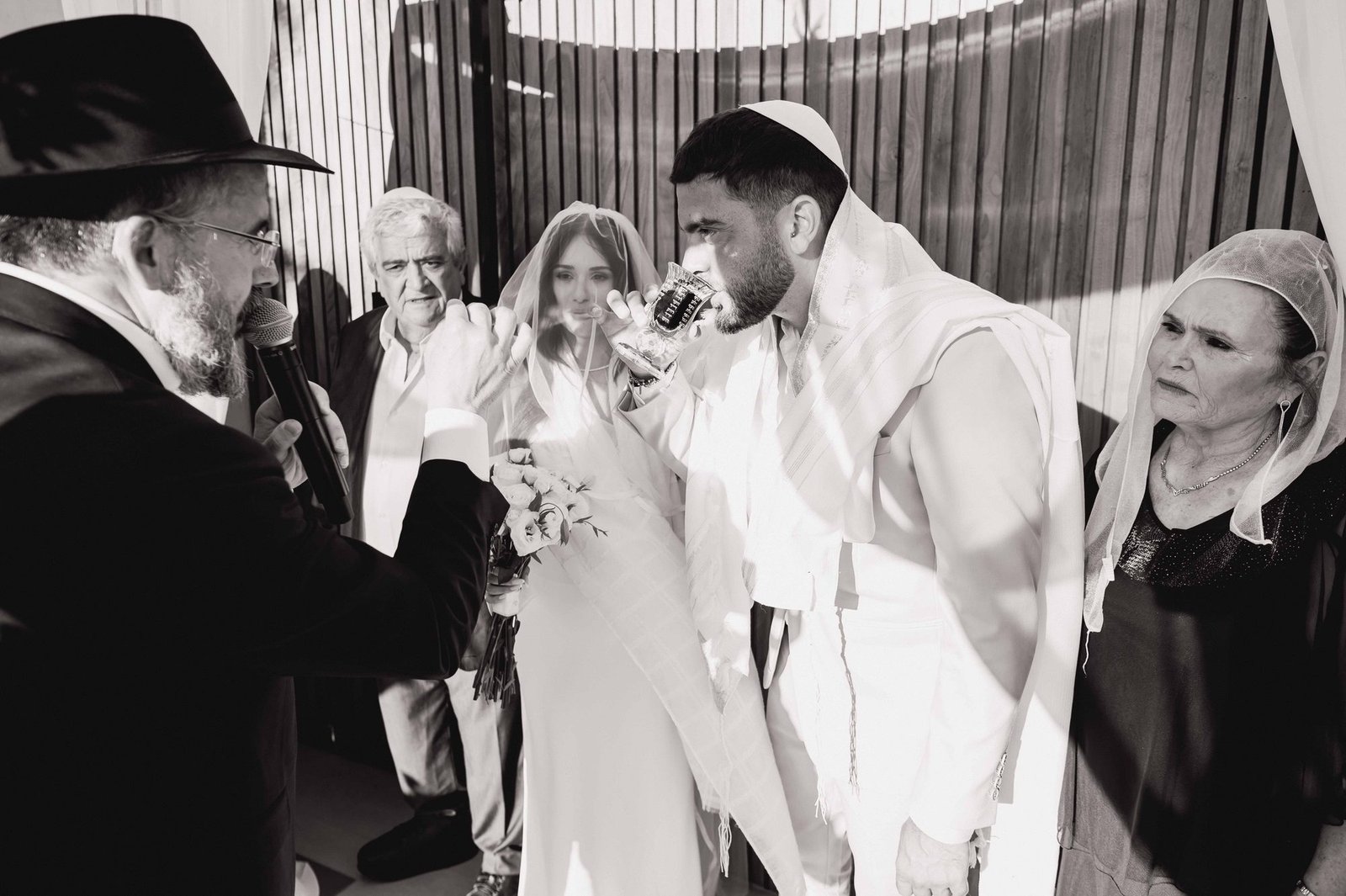
The walk to the chuppah is a moment for the parents too, so I photograph each couple walking in. Under the chuppah I watch for the seven circles, the blessings over the wine, the ring, and the reading of the ketubah. Many weddings here have the chuppah outdoors at sunset. The light is beautiful, but it changes every minute. For this reason I check the exact sunset time, and I ask the couple to start the ceremony about forty minutes before it. That way the chuppah has golden light, and the first dance still has a little color in the sky.
Breaking the glass
Everyone knows this moment is coming, and everyone shouts “Mazal tov!” at the same time. The foot comes down, the glass breaks, and the couple kisses. I shoot a burst of frames here, from a low angle if I can. That way the foot, the glass and the faces are all in one picture.
Yichud
After the chuppah, the couple goes into a private room for a few minutes. Traditionally no one goes in with them, and I respect that completely. However, the moment they walk out is wonderful. They have been hugged by two hundred people, and now they take a breath together. If the couple agrees, I take a few quiet portraits right then, while the light is still soft.
The hora
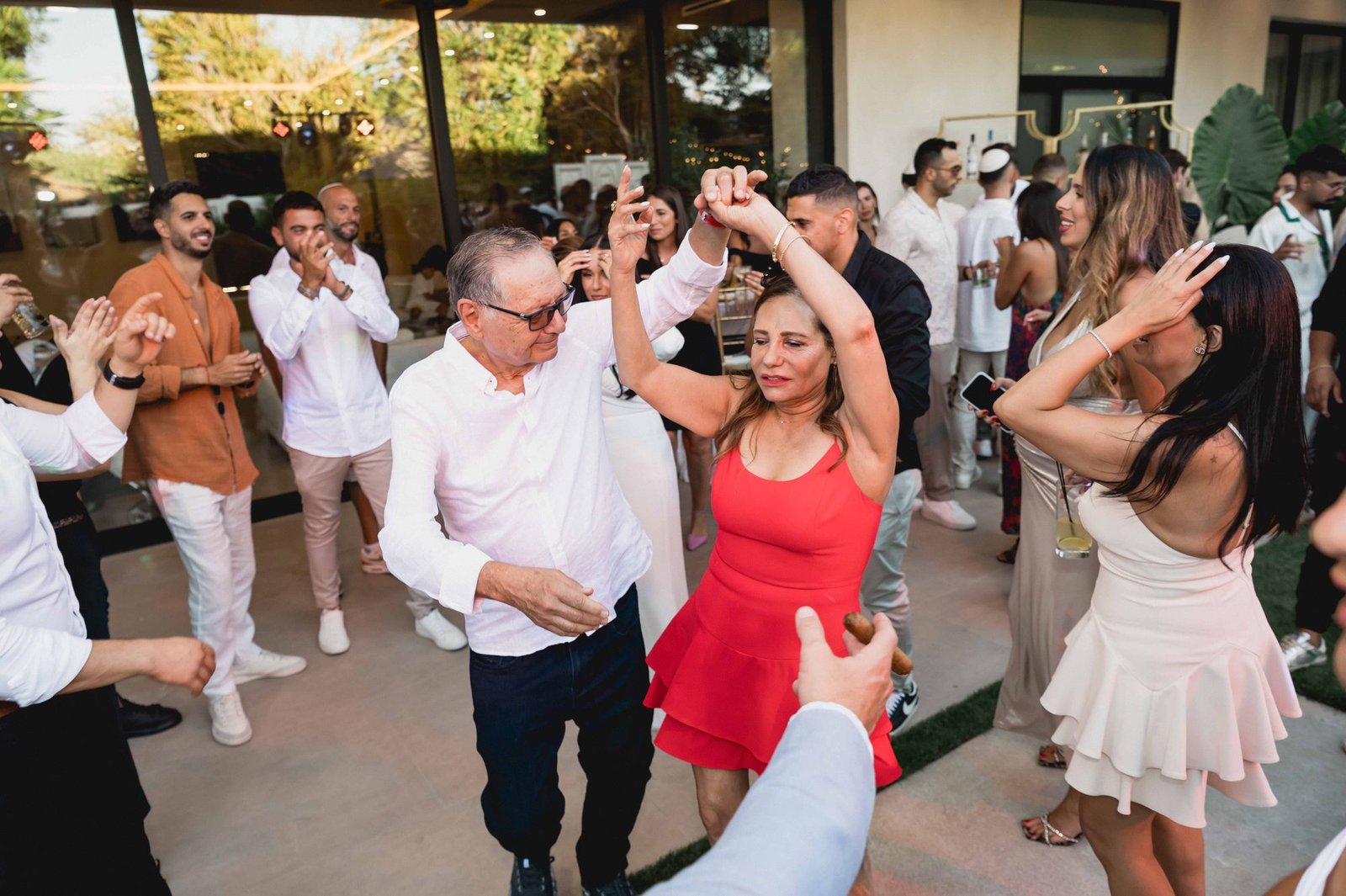
The hora is where Jewish wedding photography becomes a sport. The circle forms in seconds, the couple goes up on chairs, and the napkin stretches between them. I position myself before the band starts, usually inside the circle, and I shoot wide. In addition, I look for the small scenes around the edges: the grandfather clapping, the kids on their fathers’ shoulders, the friends who cannot stop laughing.
How I make sure nothing is missed
- I meet or call every couple before the wedding and go over the customs they keep. Sephardi and Ashkenazi weddings differ, and so do families.
- I get the timeline from the venue and the rabbi, not only from the couple, because they often disagree by half an hour.
- I arrive early and walk the venue, so that I know where the light is and where I can stand.
- For a large wedding, I bring a second shooter, because Jewish wedding photography has too many parallel scenes for one camera. One of us stays with the couple, and the other stays with the families.
- I use two cameras, so that I never miss the glass because I was changing a lens.
A note on Shabbat and kashrut
Most Israeli weddings are held on a weeknight, often Tuesday or Thursday, and they run late. If the wedding is on a Saturday night, right after Shabbat, the timeline is tight. The ceremony tends to start late, and the dancing runs until early morning. Also, if the venue is kosher, the photographer eats with the other vendors in a separate area. That is normal. None of this changes the photography itself, but it helps to know in advance.
Let’s talk about your wedding
Every Jewish wedding is its own story, and I love telling it from the tisch to the last dance. Good Jewish wedding photography is not about luck; it is about knowing what comes next. You can see recent weddings in my wedding portfolio, and if you are getting married in Israel and want to talk about Jewish wedding photography for your day, message me on WhatsApp at 050-9540853. Send me your date and venue, and I will tell you if I am free.